

Close Menu
    DevStackTipsDevStackTips
    • Home
    • News & Updates
      1. Tech & Work
      2. View All

      From Data To Decisions: UX Strategies For Real-Time Dashboards

      September 13, 2025

      Honeycomb launches AI observability suite for developers

      September 13, 2025

      Low-Code vs No-Code Platforms for Node.js: What CTOs Must Know Before Investing

      September 12, 2025

      ServiceNow unveils Zurich AI platform

      September 12, 2025

      DistroWatch Weekly, Issue 1139

      September 14, 2025

      Building personal apps with open source and AI

      September 12, 2025

      What Can We Actually Do With corner-shape?

      September 12, 2025

      Craft, Clarity, and Care: The Story and Work of Mengchu Yao

      September 12, 2025
    • Development
      1. Algorithms & Data Structures
      2. Artificial Intelligence
      3. Back-End Development
      4. Databases
      5. Front-End Development
      6. Libraries & Frameworks
      7. Machine Learning
      8. Security
      9. Software Engineering
      10. Tools & IDEs
      11. Web Design
      12. Web Development
      13. Web Security
      14. Programming Languages
        • PHP
        • JavaScript
      Featured

      Optimizely Mission Control – Part III

      September 14, 2025
      Recent

      Optimizely Mission Control – Part III

      September 14, 2025

      Learning from PHP Log to File Example

      September 13, 2025

      Online EMI Calculator using PHP – Calculate Loan EMI, Interest, and Amortization Schedule

      September 13, 2025
    • Operating Systems
      1. Windows
      2. Linux
      3. macOS
      Featured

      DistroWatch Weekly, Issue 1139

      September 14, 2025
      Recent

      DistroWatch Weekly, Issue 1139

      September 14, 2025

      sudo vs sudo-rs: What You Need to Know About the Rust Takeover of Classic Sudo Command

      September 14, 2025

      Dmitry — The Deep Magic

      September 13, 2025
    • Learning Resources
      • Books
      • Cheatsheets
      • Tutorials & Guides
    Home»Learning Resources»Veil of Vigilance: Tails 6.0’s New Frontiers in Surveillance Resistance

    Veil of Vigilance: Tails 6.0’s New Frontiers in Surveillance Resistance

    July 30, 2025
    Veil of Vigilance: Tails 6.0’s New Frontiers in Surveillance Resistance
    by George Whittaker

    Opening the Curtain on Tails 6.0

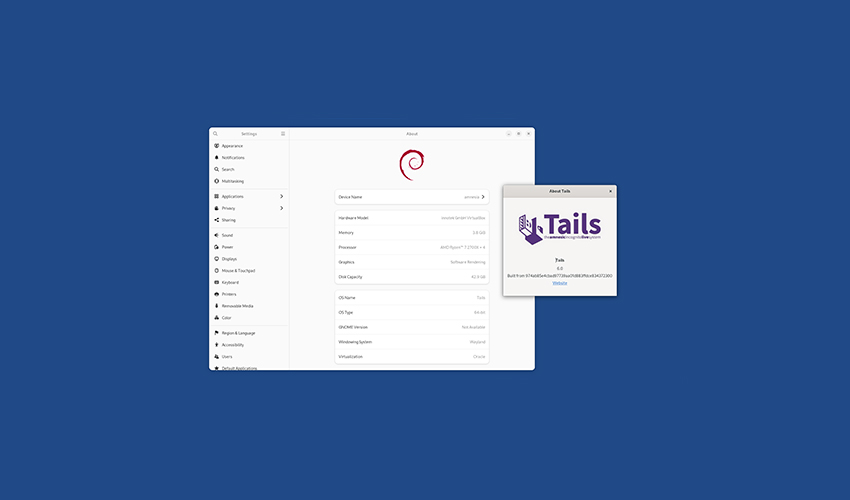
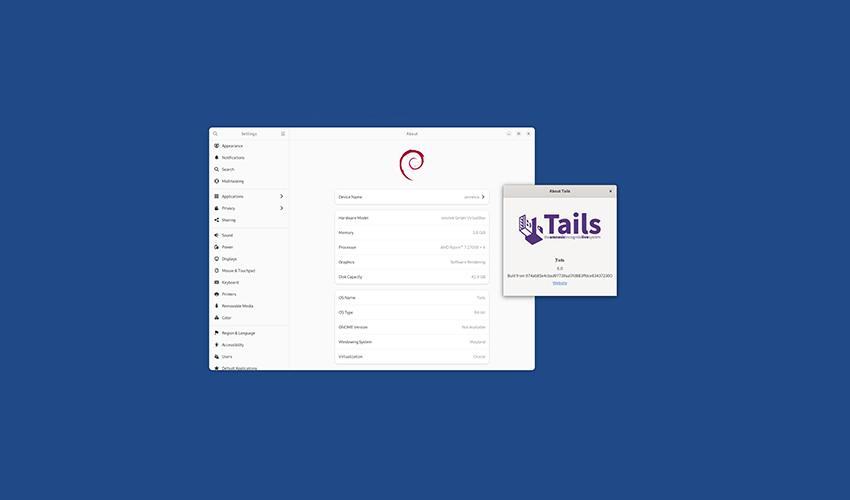
    On February 27, 2024, the Tails Project unveiled version 6.0, a milestone release built atop Debian 12 “Bookworm” and GNOME 43 . Tails, short for The Amnesic Incognito Live System, is engineered from the ground up to prevent data leakage, protect against targeted surveillance, and ensure that every use leaves no trace unless explicitly permitted . Version 6.0 refines this mission with a bold suite of features tailored to block modern surveillance tactics.

    USB Integrity: Stopping Sneaky Hardware Threats

    Warnings for Persistent Storage Failures

    Live USBs are critical lifelines for persistence in Tails. Now, Tails 6.0 alerts users when underlying storage suffers read/write errors. This early detection, prior to catastrophic data loss, allows users to back up their encrypted areas before disaster strikes .

    Defense Against Rogue USB Devices

    One of the stealthiest attack vectors involves plugging in malicious USB gear while a device is unattended. Tails now ignores any USB device connected while the screen is locked. Only when the screen is unlocked can new USB devices be activated, closing the door on rubber‑duckying-style malware delivery .

    Usability Upgrades That Don’t Sacrifice Security

    Automatic Device Mounting with Safeguards

    Plug in a flash drive or encrypted external disk while Tails is unlocked, and the system now instantly mounts the device and prompts for decryption (e.g. VeraCrypt volumes), smoothing workflow while preserving safeguards .

    Ambient Display Options for Privacy-Conscious Use

    GNOME 43 brings native support for dark mode, night‑light warm tones, or combinations thereof, all accessible via the system menu. These modes reduce eye strain and lower screen glare in sensitive situations, minimizing accidental disclosure in low-light settings .

    Simplified Screenshots and Screencast Access

    Through a redesigned system menu, users can now take screenshots or record screencasts with a few clicks—reducing reliance on external tools and minimizing exposure via unnecessary browser or app use .

    Streamlined Gmail Setup in Thunderbird

    Configuring a Gmail account is now smoother: Tails 6.0 allows direct sign‑in within Thunderbird using standard two-step verification, no manual IMAP or security adjustments required, eliminating error-prone manual steps .

    Go to Full Article

    Source: Read More

    Facebook Twitter Reddit Email Copy Link
    Previous ArticleThe Best Related Post Plugins For WordPress in 2025
    Next Article Empowering Developers and Fueling AI Adoption with AmpereOne Design Innovations

    Related Posts

    Learning Resources

    What I learned from Inspired

    September 15, 2025
    Learning Resources

    Talk to more users sooner

    September 15, 2025
    Leave A Reply Cancel Reply

    For security, use of Google's reCAPTCHA service is required which is subject to the Google Privacy Policy and Terms of Use.

    Continue Reading

    CVE-2025-46192 – SourceCodester Client Database Management System SQL Injection

    Common Vulnerabilities and Exposures (CVEs)

    Windows 10 KB5063842 Preview Update Brings New Features & Bunch of Bug Fixes

    Operating Systems

    Best Free and Open Source Alternatives to Google Firebase

    Linux

    CVE-2025-7775 – Citrix NetScaler Memory Overflow Vulnerability – [Actively Exploited]

    Common Vulnerabilities and Exposures (CVEs)

    Highlights

    CVE-2012-10031 – BlazeVideo HDTV Player Pro Stack-Based Buffer Overflow

    August 5, 2025

    CVE ID : CVE-2012-10031

    Published : Aug. 5, 2025, 8:15 p.m. | 3 hours, 10 minutes ago

    Description : BlazeVideo HDTV Player Pro v6.6.0.3 is vulnerable to a stack-based buffer overflow due to improper handling of user-supplied input embedded in .plf playlist files. When parsing a crafted .plf file, the MediaPlayerCtrl.dll component invokes PathFindFileNameA() to extract a filename from a URL-like string. The returned value is then copied to a fixed-size stack buffer using an inline strcpy call without bounds checking. If the input exceeds the buffer size, this leads to a stack overflow and potential arbitrary code execution under the context of the user.

    Severity: 0.0 | NA

    Visit the link for more details, such as CVSS details, affected products, timeline, and more…

    6 ways to protect your passport and other travel docs from cybercriminals – before it’s too late

    July 16, 2025

    PyQSO – contact logging tool for amateur radio operators

    June 12, 2025

    Five Proven Ways to Improve Your Website’s SEO Ranking (2025 Guide)

    May 11, 2025
    © DevStackTips 2025. All rights reserved.
    • Contact
    • Privacy Policy

    Type above and press Enter to search. Press Esc to cancel.